





ego (lite) ist nur ein Browser, ego ist Ihr persönlicher Agent für alle Geräte.
Zur Warteliste anmelden
ego lite vs Browser Harness

The Best Browser Harness Alternative

Browser Harness is Browser Use's local version: a Python agent loop you run on your own machine with your own LLM API key, launching its own browser and calling the model again at every step to plan the next move.

ego lite needs no framework: the coding agent you already run drives your real, logged-in browser directly, batching actions instead of narrating them one at a time. Across 31 live-site jobs it finishes 96.8% of tasks with a perfect score to Browser Harness's 83.9%, on 41% fewer model round trips.

Vertraut von Entwicklern von
GoogleAmazonShopifyTikTokHarvardStanfordUSCUCLA

Browser automation benchmark: ego lite vs Browser Harness

This is live browser automation, not a sandbox demo. ego lite and Browser Harness, Browser Use's local version, ran the same 31 multi-step tasks on real websites: several pages, several decisions, often a login you already have. The hosted cloud product was not part of this run. Local against local, same jobs, scored the same way.

agent: pimodel: ChatGPT 5.6 Solthinking: max31 tasks

Task completion rate

How often the agent finished the job. Stuck at login, skipped a step, or returned the wrong result: that task is a fail. Higher is better.

ego lite96.8%30 of 31 tasks perfect
Browser Harness (Browser Use local version)83.9%26 of 31 tasks perfect

Cost per completed task

What one finished job costs in model spend. Failures still get billed, so they push this number up. Lower is better.

ego lite$1.98
Browser Harness (Browser Use local version)$3.04

Model turns per task

How many times the model had to look at the page and choose the next action. Extra looks mean extra tokens, extra waiting, and extra places to stall. Lower is better.

ego lite30.3
Browser Harness (Browser Use local version)51.2

Average task time

How long a job took from start to finish, on average, including time spent waiting on the model. Lower is better.

ego lite8m 38s
Browser Harness (Browser Use local version)9m 58s

We ran every tool twice and kept the better score. A failed task still counts against it.

Check the numbers, or rerun the tasks yourselfThe 31 tasks, the grading checklists, and the raw results are open source. If a number looks off, open the repo.ego-browser-benchmark-framework

Why ego lite is better than Browser Harness

With Browser Harness, the browser agent is something you build: a Python project, an LLM API key, a loop that calls the model every step. With ego lite, it's something you already have. Run /ego-browser inside Claude Code, Codex, or Cursor and your agent gets your actual browser, logins and all. (Browser Use's hosted cloud product is a different category; the local-versus-local matchup is this page.)

96.8% of tasks done perfectly. No other tool tops 84%.

Browser Harness's agent loop calls the LLM at every step: read the page, decide the next batch of actions, wait, repeat. It turned in the most careful runs of any competitor on those 31 jobs, and paid for the care in round trips: 51.2 model calls per task, the most of the five tools measured, each one re-sending page state just to plan the next few clicks.

In ego lite, every page reaches your agent as a compressed Snapshot it can act on immediately, several actions per JavaScript turn, no separate model loop deciding a step at a time. The result on the same 31 tasks: 96.8% perfect to Browser Harness's 83.9%, on 41% fewer round trips and 35% less model spend per completed task.

Time to finish a task, shorter is better
518 sego (lite)
598 sbrowser harness
Data source - Task: finish an average live-site job
Paralleles Multitasking, schnellere Ausführung

Browser Use's own docs mark parallel Browser Harness runs experimental: developers note agents can conflict when they share resources, and real isolation means standing up a separate browser instance per task yourself.

In ego lite gibt es kein Limit für Spaces: Jeder erledigt gleichzeitig seine eigene Aufgabe, mit seinem eigenen importierten Chrome-Profil. Keiner davon kapert deinen Tab, und du kannst jeden Space jederzeit beobachten oder übernehmen.

Kein Hin und Her mehr Geringere Token-Kosten

Browser Harness's loop calls the model at every step and carries the page state along, and on longer tasks that cost compounds fast enough that users ask the Browser Use maintainers how to avoid burning tokens on a task that runs the same way every time.

Dein Agent in ego lite fasst pro Zug mehrere Aktionen in wenigen Zeilen JavaScript zusammen, statt auf einen neuen Modellaufruf zu warten, um weiterzumachen. In Kombination mit Snapshot als Input kommt dieselbe Aufgabe insgesamt mit deutlich weniger Tokens aus.

Claude Code · ego lite
>/ego-browser Add the first product to the cart, then check checkout loads
Bash(
ego-browser nodejs <<'EOF' await openOrReuseTab('localhost:3000') await click('.product-card') await click('.add-to-cart') await click('a[href="/checkout"]') cliLog('checkout loaded') EOF
)
Output:
[t=4480ms] checkout loaded
Done. Both steps work.
─── 1 tool call · 1.1k tokens ───
Browser Harness · agent.run()
>$ python run_task.py 🎯 Task: Add the first product to the cart, then check checkout loads
📍 Step 1:
👍 Eval: Page loaded successfully
🧠 Memory: On demo store homepage, need to find a product
🎯 Next goal: Open first product and add it to cart
📍 Step 1: Ran 3 actions in 2.1s: ✅ 3
3.4k tokens sent so far
📍 Step 2:
👍 Eval: Product added to cart
🧠 Memory: Item in cart, now check checkout
🎯 Next goal: Navigate to checkout and confirm it loads
📍 Step 2: Ran 2 actions in 1.9s: ✅ 2
7.1k tokens sent so far
📍 Step 3:
👍 Eval: Checkout page did not load on first click
🧠 Memory: Link required a second click, retrying
🎯 Next goal: Retry the checkout link and wait for the form
📍 Step 3: Ran 1 action in 2.3s: ✅ 1
10.8k tokens sent so far
📍 Step 4:
👍 Eval: Payment form is present
🧠 Memory: Task complete
🎯 Next goal: done
📍 Step 4: Ran 1 action in 1.4s: ✅ 1
13.6k tokens sent so far
─── 4 model calls · 13.6k tokens ───
The same task, the same model. Left: one batched JavaScript call in ego lite, 1.1k tokens total. Right: Browser Harness's agent loop, a fresh model call per step, tokens climb to 13.6k.

Dasselbe Chrome, nativ für Agenten

Browser Harness launches its own Chromium over the DevTools protocol, and the Browser Use GitHub issues are full of developers hitting profile-lock errors pointing it at their real Chrome: the --profile flag copies the live profile into a temp directory, and on Windows that copy fails outright while Chrome holds the file locks.

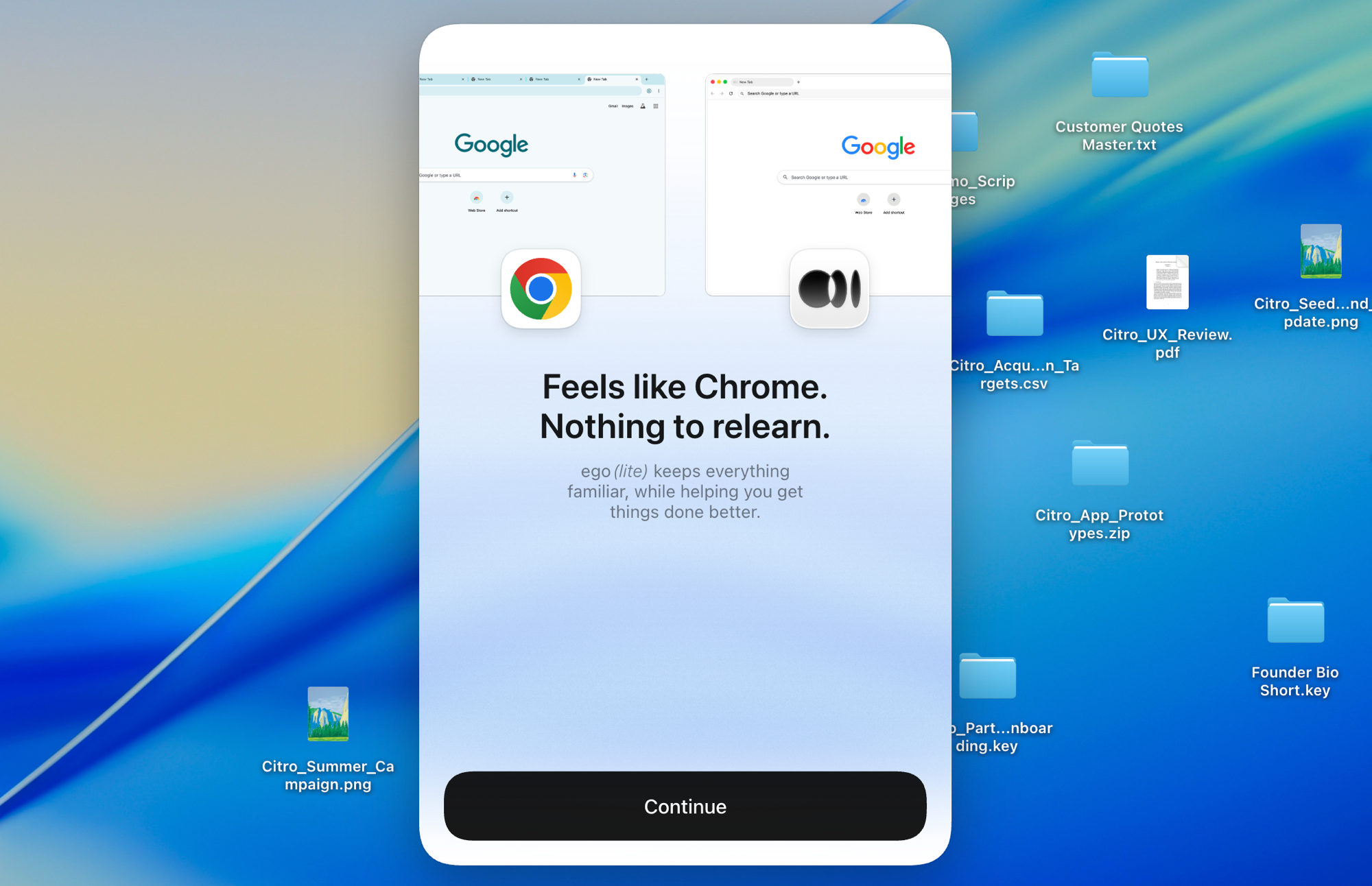
Basierend auf Chromium importiert ego lite dein gesamtes Chrome-Setup mit einem Klick, live und ohne dass du vorher irgendetwas schließen musst. Deine Agenten übernehmen echte Logins, ohne je hängen zu bleiben.

ego lite Chrome-Profilimport: Einrichtung mit einem Klick, inklusive aller Logins

ego lite vs Browser Harness

Feature comparison between ego lite and Browser Harness.
Funktionego liteBrowser Harness
Wer stellt das Modell bereitDein Coding-Agent (Claude Code, Codex, Cursor)Du, mit eigenem LLM-API-Key und Bezahlung pro Token
EinrichtungApp installieren, /ego-browser in deinem Agenten ausführenPython-Projekt, pip install, Modellkonfiguration, Aufgabencode
Eingeloggte Websites (SSO, 2FA)Chrome-Profilimport mit einem Klick, standardmäßig eingeloggtGestartetes Chromium; Profilwiederverwendung erfolgt manuell, mit Einschränkungen
Wie Aktionen ausgeführt werdenMehrere Aktionen pro Zug gebündelt in JavaScriptAgentenschleife ruft bei jedem Schritt das Modell auf
Token-Kosten pro AufgabeNiedriger: Snapshot als Input plus gebündelte Aktionen, gemessen pro AufgabeHöher: Bei jedem Schritt wird der Seitenzustand erneut durch das Modell geschickt
Browser automation on live sites (31 tasks, same model)96.8% perfect, $1.98 per completed task, 30.3 round trips83.9% perfect, $3.04 per completed task, 51.2 round trips
Parallele AufgabenSpaces isolieren Aufgaben innerhalb eines sichtbaren BrowsersExperimentell; mehrere Agenteninstanzen oder die kostenpflichtige Cloud
Fungiert zugleich als dein täglicher BrowserJa, du browst in deinem Space, Agenten arbeiten in ihrem eigenenNein, eine Automatisierungsbibliothek und gehostete Browser
Wiederverwendbare Skills (bald verfügbar)Verdichtet erfolgreiche Durchläufe zu wiederverwendbaren Skills; bis zu 5-mal schneller bei komplexen Aufgaben, wenn der Agent sie wiederholt (limitierte Beta)Keine integrierte Entsprechung
PreisKostenlos, kein AbonnementOpen Source kostenlos; Cloud- und LLM-Nutzung sind kostenpflichtig
Zuletzt aktualisiert 20. Aug. 2026

Der nahtlose Wechsel

If you set up Browser Harness to automate your own browsing (research, form filling, logged-in chores) rather than to ship a product, the switch removes the whole project layer.

  1. ego (lite) herunterladen

    Download ego lite and import your Chrome profile in one click. The logins you were configuring Browser Harness to reach come along automatically.

  2. Starte deine erste Aufgabe mit /ego-browser

    In deinen Agenten einfügen

    /ego-browser Öffne ego.app und trage dich auf die Warteliste ein

    Führe /ego-browser in Claude Code, Codex oder Cursor aus. Keine Python-Umgebung, keine Modellauswahl, kein API-Key.

  3. Sieh es dir bei der Arbeit an
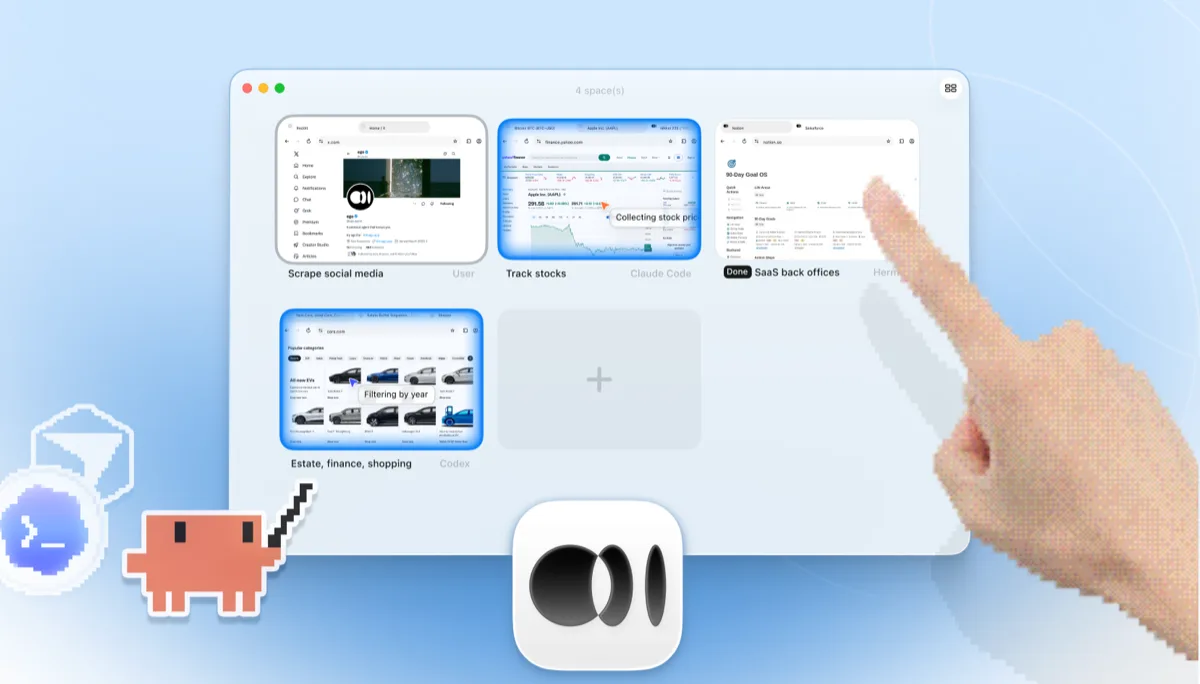
    ego lite Spaces-Übersicht mit vier Browser-Aufgaben, die nebeneinander laufen: Claude Code verfolgt die Apple-Aktie auf Yahoo Finance, Codex filtert Autos nach Baujahr auf cars.com, Hermes erledigt eine SaaS-Back-Office-Aufgabe, ein Nutzer scrapt X, und eine Hand tippt auf +, um einen weiteren Space zu öffnen

    Die Aufgabe läuft in ihrem eigenen Space, nicht in einer Headless-Chromium-Instanz, bei der du nur aus Logs raten kannst, was passiert. Schau live zu oder übernimm jederzeit, und das Ergebnis landet zurück in der CLI deines Agenten.

Keep Browser Harness where it belongs: inside Python products and pipelines you're building for others. ego lite covers the agent browsing you do yourself.

Wann sich welches Tool eignet

Wähle ego (lite), wenn

  • Du möchtest, dass ein Agent deine eigene Browser-Arbeit erledigt (Recherche, Formulare, eingeloggte Routineaufgaben), ohne dafür etwas in Python zu bauen.
  • Du nutzt bereits Claude Code, Codex oder Cursor und willst keine zweite Agentenschleife mit eigener API-Key-Rechnung.
  • Die Aufgaben brauchen deine echten Logins: Profilimport mit einem Klick schlägt die manuelle Chromium-Profilkonfiguration.
  • Du möchtest Aufgaben in parallelen Spaces laufen lassen, in einem sichtbaren Browser, den du beobachten oder übernehmen kannst.

Choose Browser Harness when

  • You're building a custom automation product or pipeline in Python. Browser Harness is a library designed to be embedded.
  • Du willst die Agentenschleife in deinem eigenen Code selbst kontrollieren: das Modell wählen, die Prompts gestalten, jeden Schritt steuern.
  • You need automations deployed to the cloud, running on Browser Use's hosted browsers when your laptop is closed.
  • Du lieferst Browser-Automatisierung an andere aus. ego lite ist ein Endnutzer-Browser, kein SDK.

Gib deinem Agenten einen echten Browser

Kostenlos, läuft auf deinem Mac und importiert dein Chrome-Profil mit einem Klick. Funktioniert mit Claude Code, Codex, Cursor und jedem CLI-Agenten, der Code schreibt.

Still weighing your options? See how Browser Harness compares with the other tools in the same space.

FAQ

Browser Harness is Browser Use's local version. Browser Use is one of the most popular open-source AI browser agent projects: an MIT-licensed Python agent loop that lets an LLM control a browser, launching its own Chromium over the DevTools protocol and deciding actions step by step against the page state. You bring your own model API key and run it on your own machine. Browser Use's paid cloud product runs hosted browser agents with stealth and captcha-solving features, which is a different category from a local browser, so this page compares the harness: local against local. For developers building custom automation products and pipelines in Python, it's a strong, actively developed foundation, and of the five local tools we measured it posted the best completion rate of any competitor.

If you want an agent to do browser work for you, yes. ego lite plugs your existing coding agent into your real logged-in browser with no Python project and no API-key billing, and across 31 live-site jobs it finished 96.8% of tasks perfectly to Browser Harness's 83.9%, at $1.98 per completed task against $3.04. If you're building a browser-automation product or pipeline in Python, Browser Use is the better fit: it's a library designed to be embedded, and ego lite isn't an SDK.

Browser Use is the project; Browser Harness is its local version, the open-source Python agent loop you run on your own machine with your own LLM API key. Browser Use also sells a cloud product that runs hosted browser agents on their infrastructure. ego lite is a local browser, so the apples-to-apples comparison on this page is against Browser Harness; if you're weighing hosted browser infrastructure, see our Browserbase page instead.

We ran both tools on the same 31 browser automation tasks on live websites, driven by the same pi agent with the same model (gpt-5.6-sol, thinking effort max) and graded by the same written checklist. Each tool keeps its better of two full runs, so a failed task still counts. ego lite finished 30 of 31 tasks perfectly (96.8%) at $1.98 per completed task on 30.3 model turns; Browser Harness finished 26 of 31 (83.9%) at $3.04 on 51.2 turns, the best completion rate of any competitor measured. Browser Use's hosted cloud product was not part of the run; the comparison is local against local. The tasks, the checklists, and the raw results are open source in the ego-browser-benchmark-framework repository on GitHub, so every number can be audited or reproduced.

Browser Harness can, with manual configuration, and it's a common source of friction. The --profile flag copies your live Chrome profile into a temp directory, and on Windows that copy fails outright while Chrome is running and holding file locks, so the workaround is closing Chrome first. Connecting to an already-running Chrome over CDP works too, but Chrome 136 and later blocks CDP on your default profile, so most setups end up on a separate, non-default one. In ego lite, the real profile is the starting point: one-click import of logins, cookies, sessions, and extensions, shared safely with your own browsing through separate Spaces.

Nein. Es gibt keine separate Modellschleife zu finanzieren. Die Intelligenz kommt von dem Coding-Agenten, den du bereits nutzt, sei es Claude Code, Codex, Cursor, Gemini CLI oder OpenCode. ego lite selbst ist kostenlos, ohne Abonnement.

Beide sind Open-Source-Tools für LLM-gesteuertes Browsing, aber Browser Use ist ein Python-Agent-Framework, das auf einer autonomen Schleife aufbaut, während Stagehand das TypeScript-first-SDK von Browserbase mit act/extract/observe-Primitiven für hybride Automatisierung aus Code und KI ist. Beide sind code-first: Du erstellst ein Projekt und stellst den Modellzugriff bereit. Für diese Seite des Vergleichs sieh dir unsere Seite ego lite vs. Stagehand an.

Sie lösen unterschiedliche Ebenen. Browser Use ist das Agent-Framework, Browserbase ist die Cloud-Browser-Infrastruktur, auf der Frameworks laufen. Teams kombinieren für den Produktionseinsatz oft eine Agent-Bibliothek mit gehosteten Browsern, und das ist ein echter Gewinn für Cloud-Flotten. ego lite gehört zu keiner der beiden Ebenen: Es ist ein lokaler, sichtbarer Browser für die Agent-Arbeit, die du auf deiner eigenen Maschine mit deinen eigenen Accounts erledigst.

Browser Harness's agent loop calls the model at every step, and each call carries a fresh serialized snapshot of the page just to plan the next batch of clicks. Users running recurring or long-horizon tasks have asked the maintainers how to cut that cost, since the same task run the same way still pays full model price every time. On those 31 jobs that loop averaged 51.2 model round trips per task, the most of the five tools measured, against ego lite's 30.3. ego lite reduces the round trips themselves: the agent batches several actions in one JavaScript execution and reads pages as compressed Snapshots, so the savings compound over a whole task.

Die ego-browser-Shell, die Agenten mit dem Browser verbindet, ist Open Source unter MIT-Lizenz. Der ego lite Browser selbst ist eine kostenlose App für macOS, ohne Abonnement, und deine Daten bleiben lokal.